Written by Zane Willman, Associate Advisor | CCG Real Estate Advisors
A few weeks ago, the City of Oceanside wrapped up one of the largest beach replenishment projects it has seen in years.
By the time the Army Corps of Engineers finished this spring, they had placed 320,000 cubic yards of sand on Oceanside's shoreline — the equivalent of more than 20,000 dump truck loads, pumped from a dredge in the harbor and spread across the beach by bulldozers. It's the largest single-season deposit in several years, and it's not the last one coming.
Congressman Mike Levin secured $8.2 million in federal funding for a second dredging cycle this fall. This is the first time Oceanside has run two operations in a single calendar year.
But what makes this year's story more interesting than past cycles isn't just the volume of sand. It's what it signals about how Oceanside is thinking about its coastline long-term.
The RE:BEACH Program: Beyond Dredging
In response to accelerating shoreline erosion south of the pier, Oceanside launched RE:BEACH — a multi-phase coastal initiative designed to move beyond annual dredging toward permanent solutions.
In 2023, the city partnered with Resilient Cities Catalyst and held an international design competition to identify new approaches to sand retention. In January 2024, the City Council unanimously approved the winning concept: "Living Speed Bumps" by ICM. The project features two rounded artificial headlands at the shoreline and one offshore artificial reef placed 900 feet out, designed to dissipate wave energy and promote natural sand deposition. Construction will focus on Tyson Street Park and the Wisconsin Avenue beach segment — two areas of chronic erosion.
This is infrastructure designed to change the physics of how sand behaves along Oceanside's coast. If it performs as modeled, it reduces the city's long-term dependence on annual dredging and creates a more permanently wide, stable beach the kind that defines cities like Encinitas and Del Mar. The current dredging is maintenance work keeping the beach functional while that longer-term solution is built.
A Beach Town Still Becoming What It Could Be
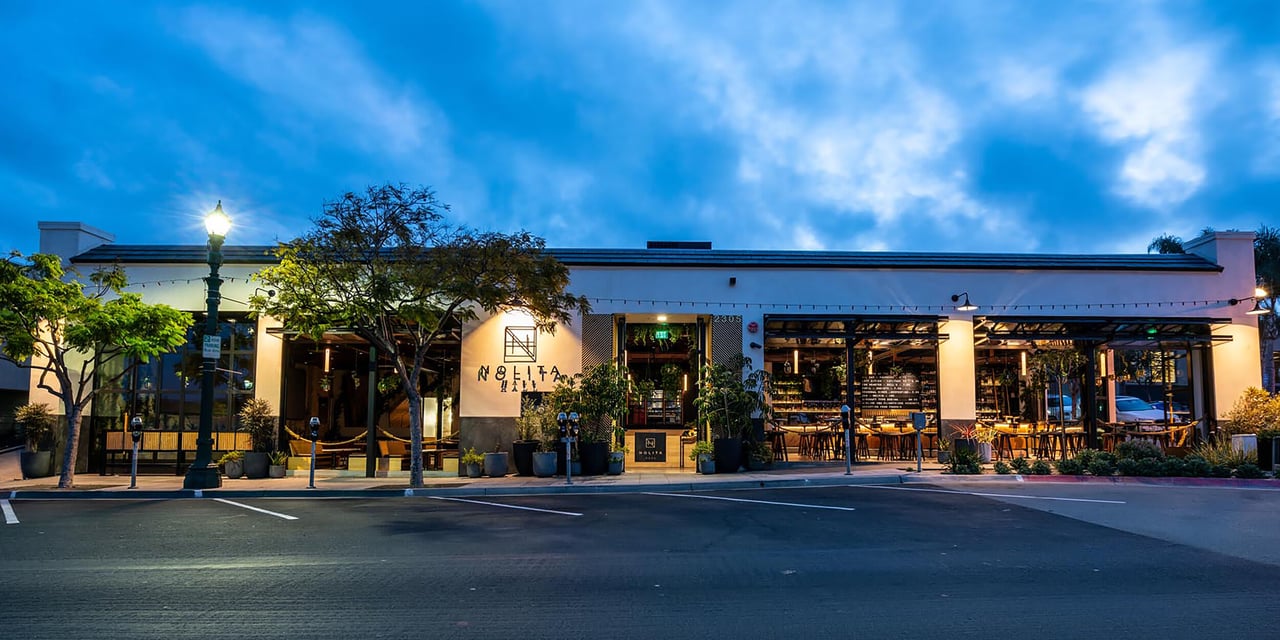
Oceanside has always had the ingredients: a functioning harbor, a historic pier, a downtown gaining real momentum with independent restaurants, hotels, and boutique retail, and Amtrak/Coaster access connecting it to San Diego and Orange County. Proximity to Camp Pendleton provides a stable demand base most coastal cities don't have. And it remains one of the few places in San Diego County where ocean-view property can still be found under a million dollars.
What it hasn't fully had, until recently, is the beach to match the rest of the story.
The physical quality of a beach drives lifestyle appeal in ways that are hard to overstate. Think about what separates the coastal cities commanding premium rents from those that don't — it's whether people actually want to spend time there. Encinitas has that. La Jolla has it. Del Mar has it. Oceanside has always had the potential, but years of erosion south of the pier quietly undermined the beach experience that should anchor all of it.
Restoring that sand isn't cosmetic. It's restoring the foundation of what makes a coastal city function as one.
What the Comparable Markets Tell Us
Oceanside is still in the phase where the trajectory is becoming visible but pricing hasn't fully reflected it. Median home values have been appreciating steadily, but remain meaningfully below comparable coastal communities further south.
Infrastructure investment has a way of closing that gap. Not overnight. But when the physical reality of a place starts to match its potential, perception tends to follow — and so does pricing.
What is Worth Watching
If you're thinking about Oceanside as an investor, here's what matters: RE:BEACH. The Living Speed Bumps project is approved and funded. If the artificial headlands and reef perform as designed, Oceanside's beach quality changes for the better.
Fall dredging results. The switch to fall dredging is an experiment with real stakes. If sand retention improves meaningfully through winter, it validates the new schedule and likely accelerates additional federal investment.
Downtown momentum. The restaurants, foot traffic, and mixed-use development are real-time indicators of whether Oceanside's revitalization is sustaining. So far the outlook is positive.
The SB 79 overlay. Oceanside qualifies for transit-oriented upzoning through its Sprinter stops and transit center. Its combination of relative affordability, transit access, and improving waterfront amenities makes it a compelling market for that law's effects over the next several years.
The Camp Pendleton floor. Military presence creates stability a consistent baseline of demand that isn't correlated to remote work trends, tech layoffs, or interest rate cycles the way purely lifestyle-driven markets can be.
The Honest Caveat
Oceanside isn't Encinitas or the other premier coastal markets San Diego has to offer. It may never be. It has a different scale, history, and community character. That's part of what makes it interesting. What the RE:BEACH program represents is a city investing seriously in its own story, committing to the physical environment that everything else is built on.