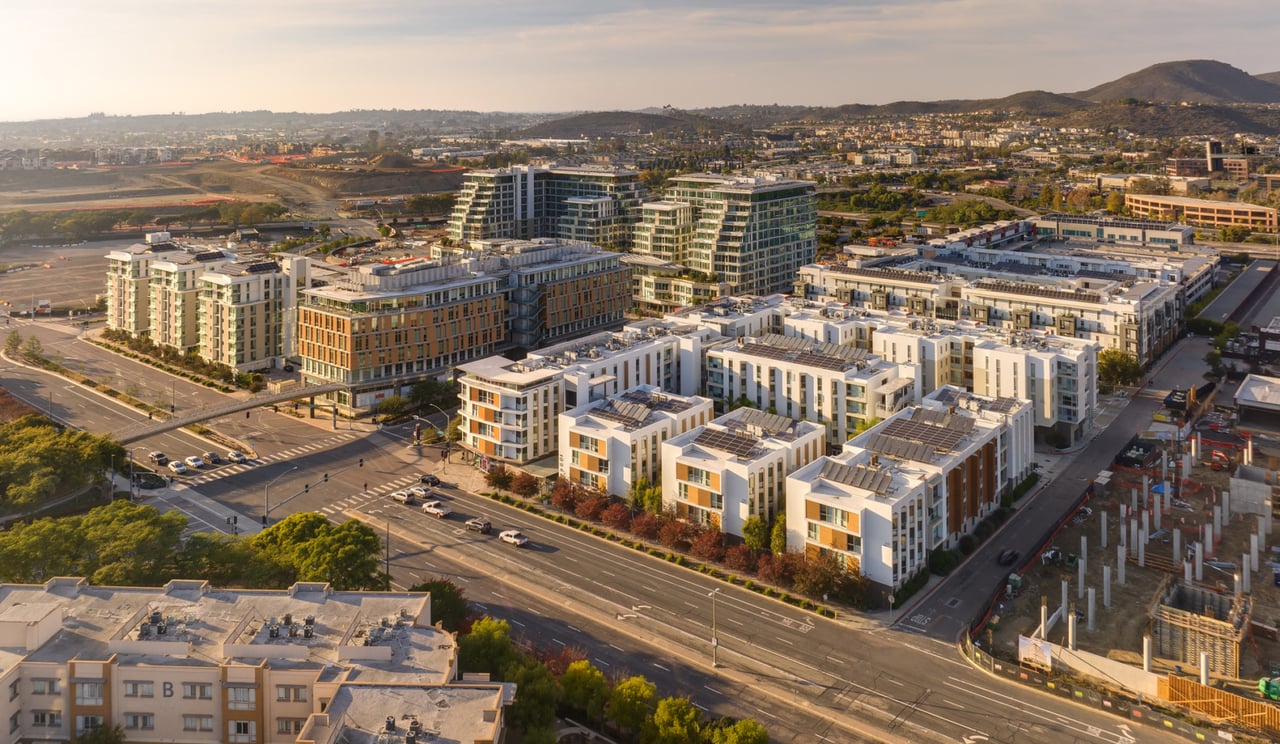
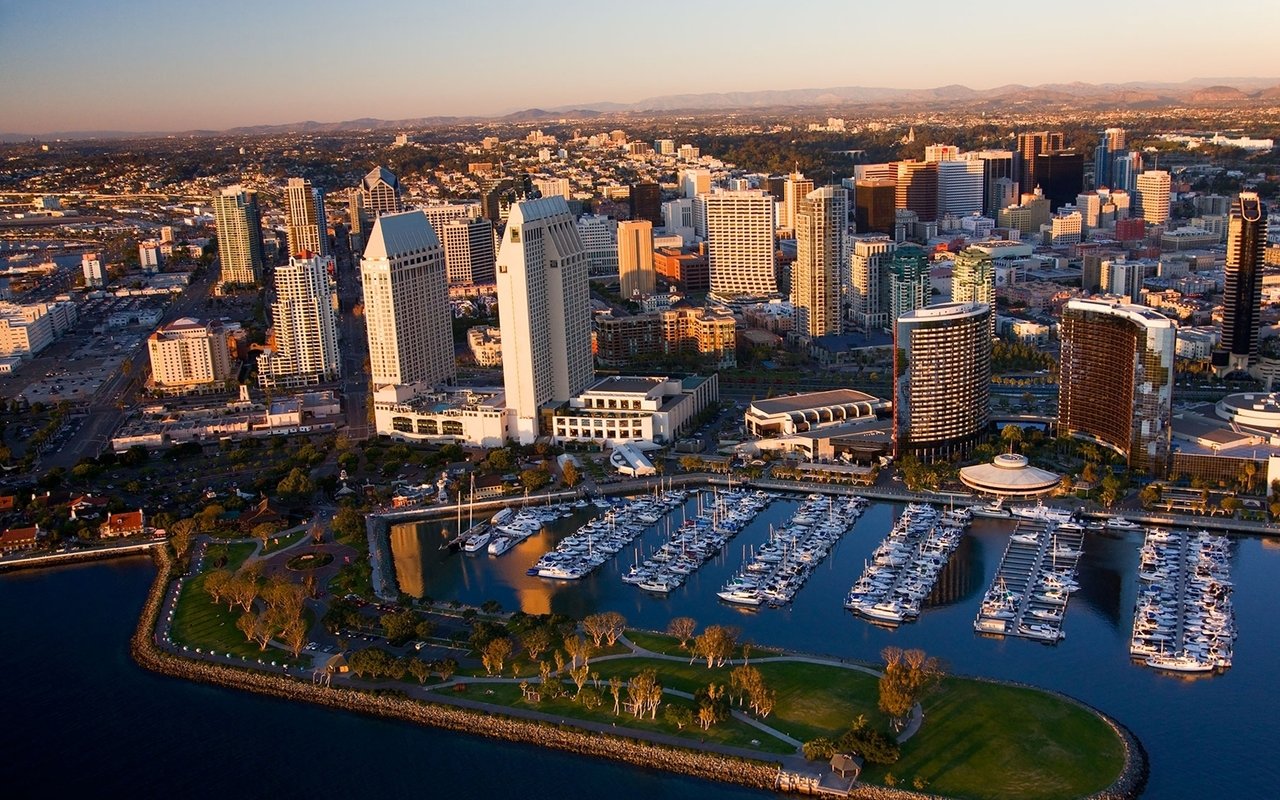
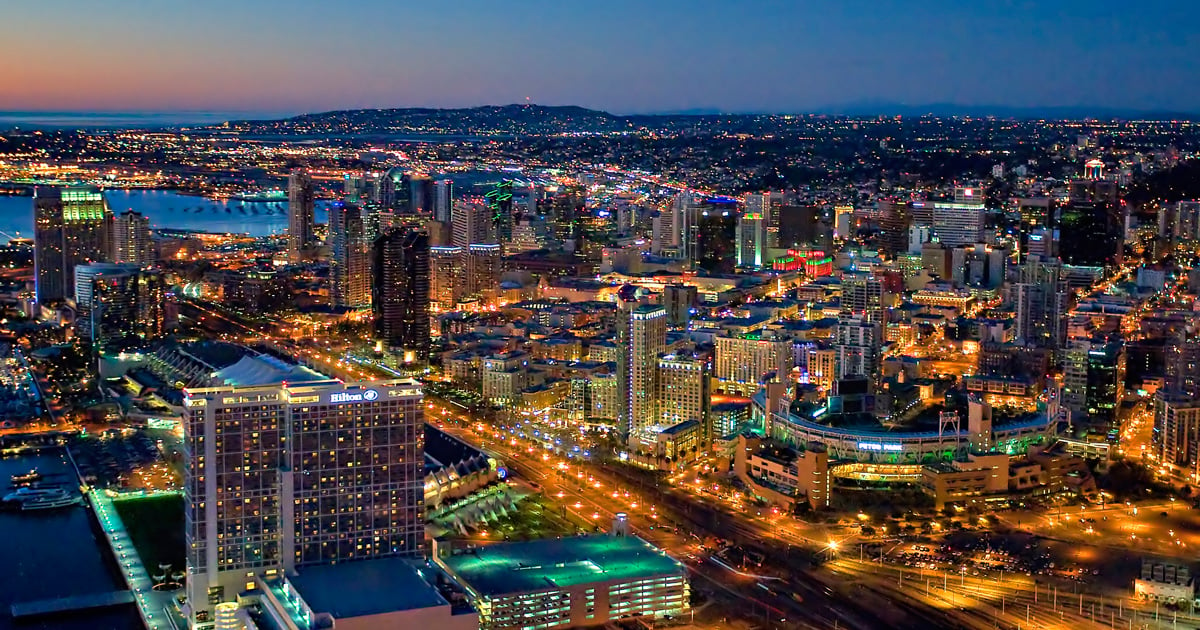
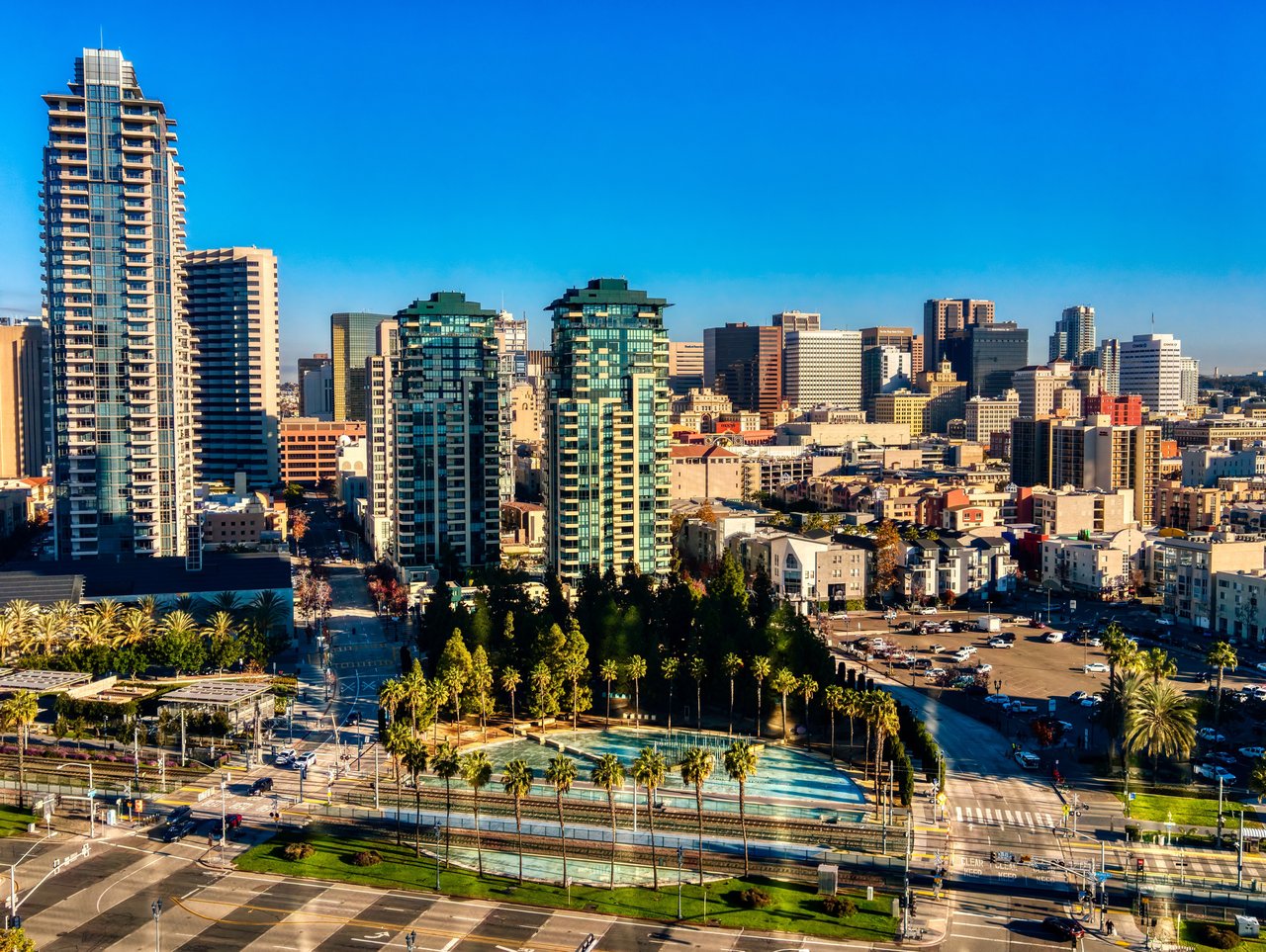
San Diego is one of the only California markets that is successfully building A LOT more multifamily buildings.
Because of that, rents are dropping, vacancies are rising, and investors are stuck trying to fill their empty units for discounts of what they used to fetch. Submarkets like Ocean Beach though, haven't.
The community has spent fifty years actively fighting to stay the way it is. For multifamily investors, that resistance to change is the investment thesis.
What OB Used to Be
Ocean Beach was platted in 1887 by developers who envisioned it as a resort town — boardwalk, streetcar line, an amusement park called Wonderland. That vision stalled out in the real estate bust of the 1890s, and OB spent the early 1900s as a sleepy getaway community.
The real identity shift came in the 1960s. When Mission Bay was dredged and I-8 rerouted traffic, Ocean Beach got cut off from the tourist flow that fed neighboring beach towns. Locals didn't mind the isolation though. It's what let OB to become, by the 1960's what longtime residents still call "the Haight-Ashbury of San Diego." Surfers, then hippies, then the artists and activists who followed built a counterculture identity: a beach town that didn't cater to anyone but itself.
How It's Looks Now
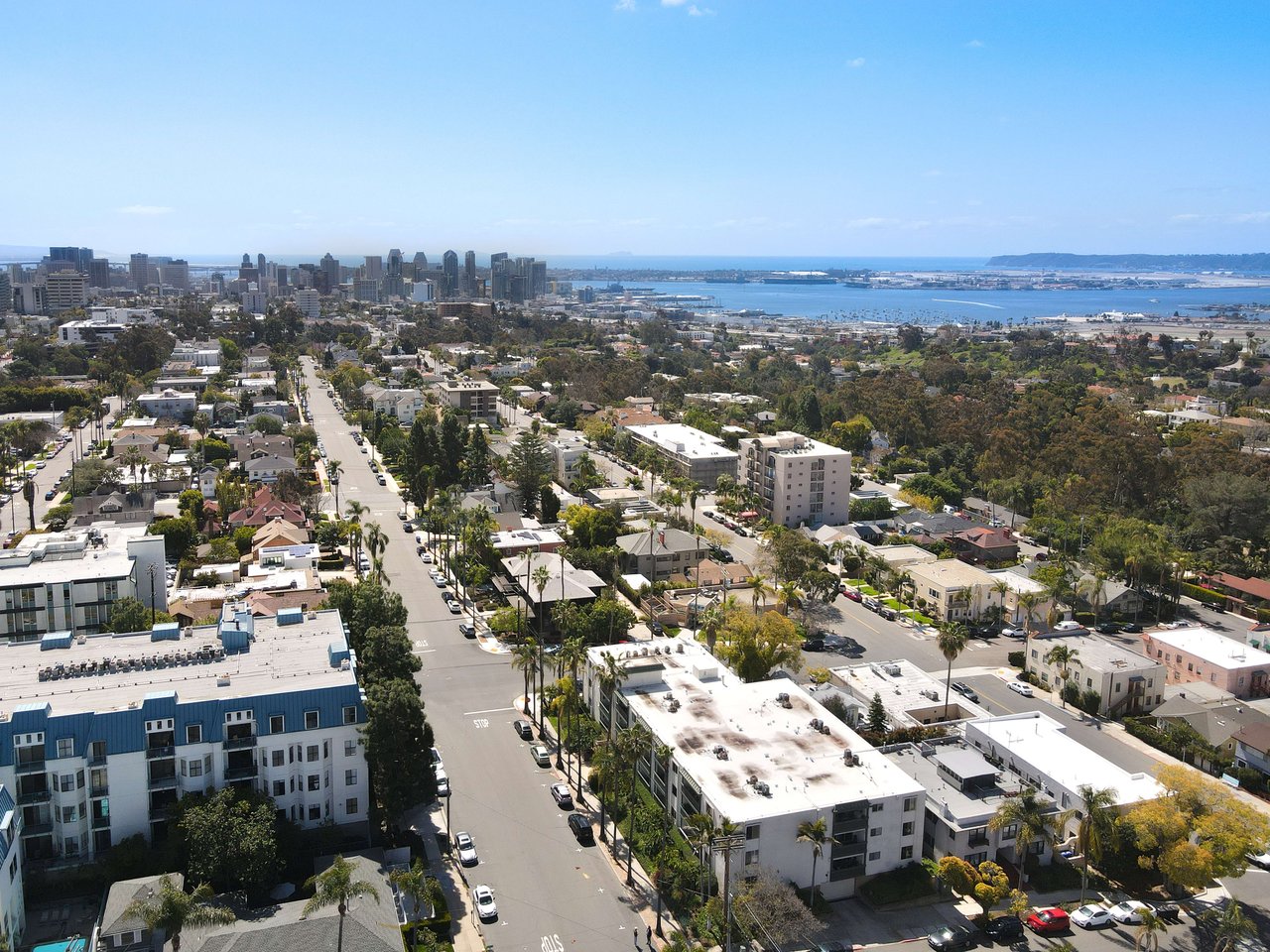
Ocean Beach never really gentrified in the way Pacific Beach, North Park, or East Village did. A 30-foot coastal height limit (Proposition D, 1972) still caps nearly everything in the neighborhood. The Ocean Beach Community Plan, finalized in 2016 after more than a decade of community negotiation, locks in low-and-medium-density zoning across most of the submarket. And the community shows up to fight anything that threatens that scale. For example, a 24-unit project on Point Loma Avenue was unanimously rejected by the Planning Commission in 2024, and OB's Historic District designation has repeatedly been used to block density exemptions under the city's "Complete Communities" upzoning push.
OB basically looks today the way it looked twenty years ago, just with higher rents attached to the same low-rise housing stock. That's known as a supply lock.
Ocean Beach's identity is built on counterculture, anti-establishment politics, the last place in San Diego you'd expect to find NIMBYism. But the loudest opposition to new housing in OB comes from the same progressive, deeply-rooted community that would tell you it's pro-housing.
"Liberal's are often conservative when it comes to housing."
It captures the paradox where abstract ideals about equality and affordable housing collide with the personal self-interest of protecting home equity and blocking local change.
The Investment Thesis
Coastal San Diego submarkets already trade at some of the most compressed cap rates in the country, and OB is no exception. Small residential income properties in prime coastal locations regularly transact around 4% despite interest rates sitting between 6% & 7%. The thesis isn't current yield. It's scarcity.
Every unit of housing stock in Ocean Beach is effectively irreplaceable under current zoning. Yet, no major new multifamily supply is coming to OB. Not because demand isn't there, but because the community has organized for fifty years to make sure it doesn't. That makes existing OB apartment buildings a bet on rent growth and long-term appreciation in a market that will not get diluted by new construction the way markets like North Park and College Area have become.
Recent Notable Deals
4802 Orchard Ave — $8,250,000 sold July 2025 | 4.5% cap rate
A 16-unit, fully renovated apartment complex two blocks from the beach traded at $665/SF.
Marketed by Marcus & Millichap, whose noted that only six multifamily properties above 5 units had traded in the entire OB submarket in the prior 12 months.
That scarcity speaks to the investment thesis in one data point.
5020-24 Brighton Ave — $1,510,000 sold July 2026 | 3.3% cap rate
A four-unit, all one-bedroom asset in a supply-constrained pocket of North OB, sold by Marcus & Millichap after trading down from an initial $1.7M ask.
Small, stabilized, walkable to the beach. the kind of deal that represents the bulk of actual OB multifamily volume. The sub-4% cap rate on a small, unrenovated asset says as much about how tight this submarket prices as any bigger trade would.
2175-2177 Bacon St — Currently for sale, asking ~$3.95M | 4.70% cap rate going in
A high-end, 2026 full gut renovation 7-unit community three blocks from the beach, marketed at a going-in cap rate above typical renovated OB deals.
Worth watching as freshly-renovated coastal product prices against the more compressed in-place yields on the older stabilized assets above.
Where OB Is Headed
Can we expect Ocean Beach to look meaningfully different in ten years? The Historic District isn't going anywhere, and every attempt at higher-density state or city overlays has run into organized local resistance that, so far, has mostly won. Will SB 79, the states new upzoning law overrule the local resistance, or is Ocean Beach destined to stay a low supply submarket forever?
For sellers, that means limited comps and a narrow buyer pool who understands the thesis. For buyers, it means competing for a fixed supply of coastal units in a submarket that is rarely adding inventory which, in a county currently oversupplied with listings almost everywhere else, is a very different conversation to be having.
Considering a move into or out of Ocean Beach multifamily? CCG Real Estate Advisors has experience navigating this specific submarket as well as the constraints and limited buyer pool.
[Schedule a call to discuss your position.]

Written by Zane Willman, Associate Advisor | CCG Real Estate Advisors